








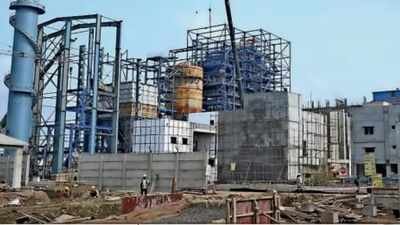
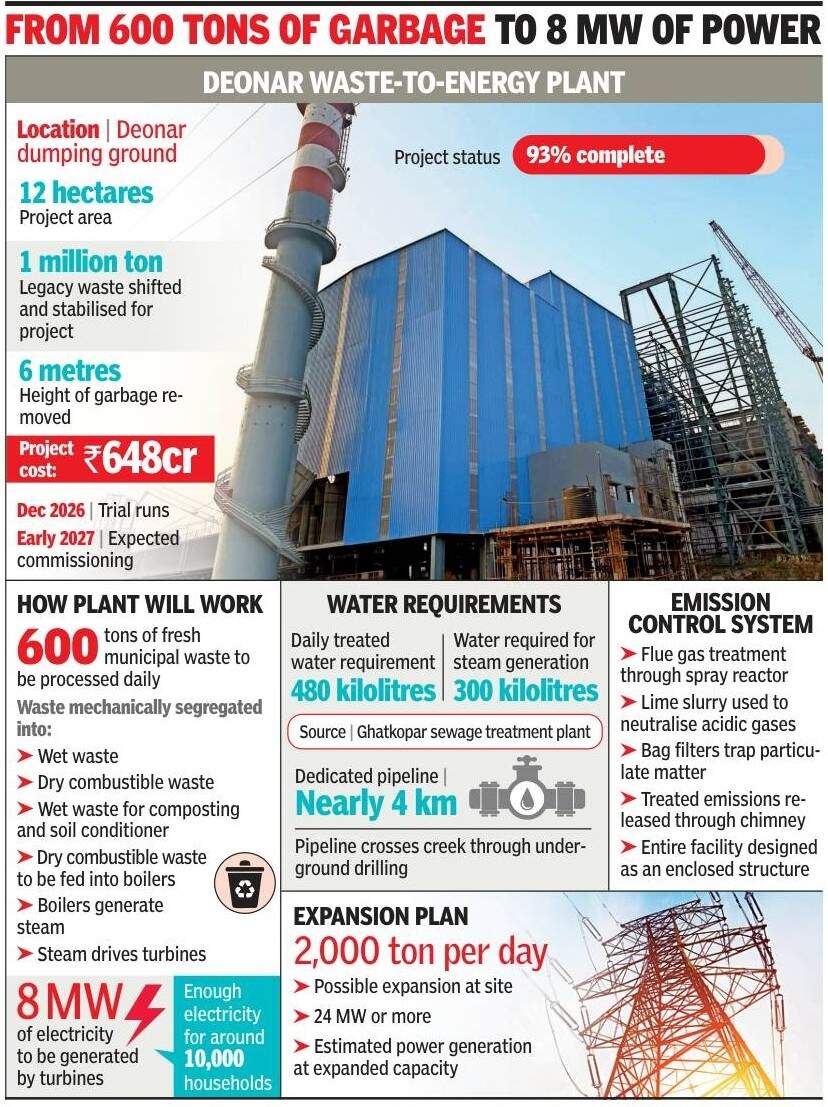
MUMBAI: The city’s first large-scale waste-to-energy plant at Deonar dumping ground is nearing completion, with the BMC set to begin trial runs in December. The Rs 648-crore project is 93% complete and is expected to become operational in early 2027, after missing its original Oct 2025 deadline. The commissioning was delayed due to logistical issues, enhancement of the plant’s power-generation capacity and delays in obtaining statutory clearances.The facility will process 600 tons of fresh municipal waste daily and is designed to generate up to 8 megawatts of electricity. Trials will run for one to two months to assess the actual output before the BMC approaches the Maharashtra Electricity Regulatory Commission (MERC) for approval to sell the power.The power is likely to be sold to Adani Electricity, with the revenue adjusted against the BMC’s electricity bills. The tariff has not been finalised and could range from Rs 5 to Rs 10 per unit, with the final rate to be determined by MERC.
From garbage to power
The BMC had earlier planned to supply the electricity to its Bhandup water treatment plant, but later dropped the proposal. “The actual output could vary depending on the quality and composition of the waste, which will be assessed during the trials,” said a BMC official.The plant can process only fresh municipal solid waste, not the legacy waste accumulated at Deonar over decades. Nearly one million tons of legacy waste had to be scientifically shifted and stabilised within the dumping ground before construction could begin.The BMC has appointed Navayuga Engineering Ltd for bioremediation of 18.5 million tons of legacy waste, disposal of excavated, processed and segregated material, and reclamation of 110 hectares of land at the Deonar dumpsite.Deonar landfill, which is no longer fully active, has been operational since 1927. The average height of waste at the site is around 20 metres, rising to 40 metres at some locations, including near Rafiq Nagar.Mumbai generates around 7,000 tons of solid waste daily, of which 500-1,000 tons are sent to Deonar while the rest is taken to the Kanjurmarg processing site.On Wednesday, Union minister of state for housing and urban affairs Tokhan Sahu visited Deonar as part of a review of solid waste management projects being implemented by the BMC under the Swachh Bharat Mission-Urban (SBM-U). Sahu was briefed on the project and the proposed compressed biogas production.