







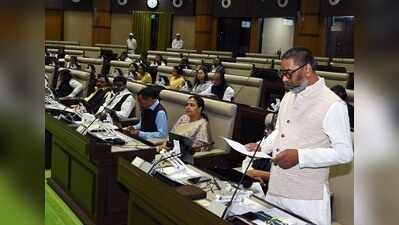
Ranchi: The Jharkhand assembly Thursday passed a resolution seeking reconsideration or withdrawal of the Centre’s amended Mines and Minerals (Development and Regulation) Act, 2026, with chief minister Hemant Soren-led alliance govt contending that the law could deprive the state of around Rs 13,000 crore in annual revenue.The resolution, moved by Soren, who also holds the mines and geology portfolio, argued that the amendment curtailed the state’s constitutional powers to levy cess on mineral-bearing land, threatening funds for welfare and development programmes. The CM accused the Union govt of selling the country’s assets while failing to pay Jharkhand Rs 1.36 lakh crore allegedly due in lieu of coal mining.On Wednesday, the first day of the two-day special session, the assembly passed a resolution seeking to halt the ongoing Special Intensive Revision (SIR) of electoral rolls in Jharkhand unless the exercise was simplified to make it accessible to people.“Democracy must safeguard both citizens’ voting rights and states’ financial autonomy. We are demanding our rights under the provisions of the Constitution, and not in opposition to India,” Hemant said, linking the two issues on Thursday.Questioning the Union govt’s approach towards mineral-rich states, the CM claimed, “Jharkhand is being deprived of its rightful share of resources despite bearing the social and environmental costs of mining.”In the resolution, Soren said the amendment, notified by the Centre on Aug 17, 2026, restricted states’ powers to levy taxes, cesses and other charges on mineral-bearing land and disregarded outstanding dues and amounts collected by states. He said it undermined the Jharkhand Mineral Bearing Land Cess Act, 2024, under which the state seeks to mobilise resources for socio-economic development and public welfare programmes.The dispute stems from the Supreme Court’s July 2024 verdict, which upheld states’ legislative powers to tax mineral-bearing land. Jharkhand subsequently enacted its cess law to tap mineral wealth for development, particularly in mining-affected areas. The Centre’s amendment has, however, restricted the scope for states to impose such levies, besides affecting claims relating to past dues, the state govt contended.Citing the Supreme Court’s July 2024 nine-judge Constitution bench verdict in the Mineral Area Development Authority vs Steel Authority of India case, Hemant said, “The verdict recognised states’ powers to tax mineral-bearing land under ‘Entry 49’ of the ‘State List’, with mineral value or production forming the basis for calculating such taxes.”“Around 210 crore tonnes of minerals could have been extracted over the next decade in Jharkhand, helping the state to earn Rs 2.56 lakh crore through taxes and cesses had its powers remained unaffected. Mineral revenue increased by 285.52% from Rs 4,888 crore in 2020 to Rs 18,844 crore in 2025-26 though mineral production rose by only 35%,” he stressed.“Any curtailment of revenue would affect funds for social security, women empowerment, education, healthcare, and rural development. Tribal communities in mining belts would bear a disproportionate burden, “ he said, referring to displacement, land alienation, environmental damage and social disruption.The BJP termed the resolutions “politically motivated”. Leader of opposition Babulal Marandi accused the govt of failing to curb illegal mining and generate revenue from allocated mines, questioning its projection of a Rs 13,000 crore loss. Citing cess collections of Rs 1,379.29 crore in 2024-25, Rs 7,487.92 crore in 2025-26 and Rs 7,122 crore till October in 2026-27, he also claimed Jharkhand was lagging Odisha in mineral revenue.Defending the amendment, Marandi said it was intended to prevent states from imposing arbitrary taxes and fees on minerals, ensuring a level playing field for industries and promoting employment.Brushing aside BJP’s objections to the assembly debating a law passed by Parliament, Congress legislative party leader Pradeep Yadav asserted, “State legislatures have the constitutional right to express their views through resolutions against central legislation.”