









MUMBAI:
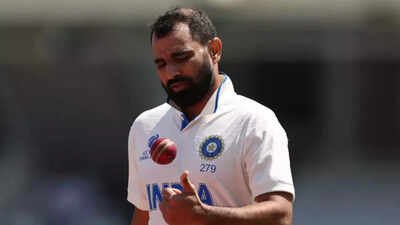
Veteran Indian fast bowler Mohammed Shami may not have enjoyed his best campaign in the Syed Mushtaq Ali Trophy, but the experienced pacer has found reasons to be satisfied with his performances. Representing Bengal in the domestic T20 competition, Shami picked up four wickets in seven matches at an average of 43.00 and an economy rate of 8.60.
His final league appearance against Rajasthan on Thursday was also a disappointing one for Bengal. Shami conceded 19 runs in three overs as his team suffered a six-wicket defeat in a must-win encounter, bringing its tournament campaign to an end.
Despite the disappointing result, Shami was pleased with the opportunity to observe emerging players and promising young talent. The fast bowler believes domestic competitions such as the Syed Mushtaq Ali Trophy provide an important platform for young cricketers to showcase their abilities and attract attention during upcoming player auctions.
Speaking to reporters at Mumbai’s Wankhede Stadium, Shami said he was encouraged by the quality of talent he witnessed throughout the tournament. He expressed hope that several young players would get opportunities in future auctions and move closer to establishing themselves in professional cricket.
Shami Has No Plans to Stop Playing White-Ball Cricket
Although Shami announced his retirement from Test cricket, the experienced fast bowler has made it clear that he intends to continue playing limited-overs cricket. He also remains interested in representing Bengal in the Ranji Trophy whenever required.
For Shami, continuing his cricketing career is primarily about maintaining his fitness and enjoying the game. Having spent nearly two decades in professional cricket, he believes his routine and motivation have not changed significantly.
The 36-year-old explained that he would continue playing white-ball cricket and could also feature in red-ball matches if necessary to maintain his physical condition. According to him, this has been part of his professional routine for the past 15–20 years.
No Regrets About His Test Retirement
Shami enjoyed an impressive career in Test cricket, claiming 229 wickets in 64 matches at an average of 27.71. His record also includes six five-wicket hauls, making him one of India’s most successful fast bowlers in the longest format.
His Test career included several memorable performances, including an outstanding eight-wicket haul against Jammu and Kashmir in the Ranji Trophy semifinal last season. Despite demonstrating that he could still deliver impactful performances with the red ball, Shami eventually decided to retire from Test cricket.
The pacer, however, insists that he has no disappointment or regrets about the way his Test journey concluded. He believes that whatever opportunities and achievements came his way were part of his destiny.
Shami stated that he was satisfied with everything he had achieved and intended to enjoy cricket for as long as he could continue playing.
Wants to Guide Bengal’s Emerging Cricketers
Beyond his personal performances, Shami is also interested in contributing to the development of younger cricketers in Bengal. He believes experienced players have an important responsibility to share their knowledge and help emerging talents improve their game.
The veteran fast bowler explained that his motivation comes from his continued love for cricket. As long as he enjoys playing, he sees no reason to walk away from the sport.
He also highlighted the importance of experience in state-level cricket, particularly when younger players are trying to establish themselves. Shami believes his presence in the Bengal dressing room could help promising cricketers learn and develop.
When asked whether he would participate in the Vijay Hazare Trophy, Shami responded positively. However, he indicated that he now has the flexibility to select the matches he wants to play, depending on his fitness and preparation.
He emphasised that there is no pressure on him and that his immediate priority is to remain fit, perform well for Bengal and continue enjoying the game.
Shami Not Thinking About Future World Cups
With the 2027 ODI World Cup and 2028 T20 World Cup approaching, speculation about Shami’s possible return to international cricket may continue. However, the fast bowler does not want to spend time worrying about future selection possibilities.
Instead, he is concentrating on his immediate responsibilities and improving his fitness. Shami said decisions regarding national selection are in the hands of the selectors, and he would respect whatever decision they make.
For now, his priorities remain straightforward: maintain fitness, represent Bengal in domestic cricket and enjoy playing the sport.
Mohammed Shami Supports Later Start Times for SMAT Matches
Shami has also supported suggestions from former Indian cricketers Irfan Pathan and Wasim Jaffer regarding the scheduling of Syed Mushtaq Ali Trophy matches.
The veteran pacer believes that starting T20 matches at 8 am or 9 am is not ideal, particularly during conditions when dew and moisture can significantly influence the behaviour of the pitch.
He suggested that matches should ideally begin between 12 pm and 1 pm. If two games are scheduled on the same day, he believes organisers should consider afternoon and evening slots.
According to Shami, early-morning moisture can influence bowling conditions and make the toss a significant factor in determining the outcome of a match. Adjusting the schedule could help create more balanced playing conditions for both teams.
Backs Shubman Gill’s Demand to Allow Saliva on the Ball
Shami has once again voiced his support for allowing bowlers to use saliva to maintain the condition of the cricket ball.
During the 2025 Champions Trophy in Dubai, the Indian pacer had previously called on cricket authorities to reconsider the restrictions on saliva, arguing that its use helps fast bowlers generate swing and reverse swing.
His latest comments came after India captain Shubman Gill reportedly raised the issue following India’s drawn Test against New Zealand in Wellington.
Shami agreed with Gill’s position, suggesting that allowing saliva could bring additional excitement to red-ball cricket and provide fast bowlers with better opportunities to generate movement through the air.
His comments underline his continued interest in improving the balance between bat and ball, particularly in Test cricket, where conventional and reverse swing remain important weapons for fast bowlers.