








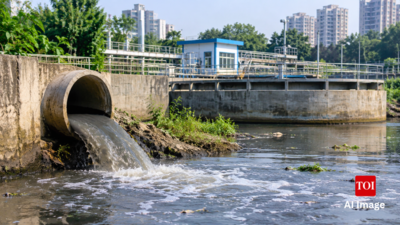
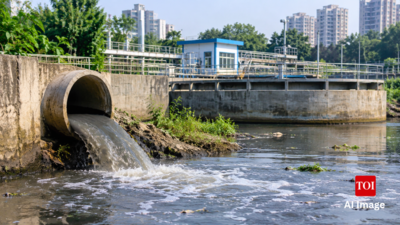
NEW DELHI: When a toilet is flushed, a drain opened, or a washing machine emptied, wastewater begins a journey most city dwellers never get to see.It travels through underground pipes, open drains and pumping stations before it is meant to end up at a sewage treatment plant (STP).But much of this wastewater never gets adequate treatment in India’s booming cities. Ultimately it flows into rivers, lakes and other water bodies and urban sanitation is a main contributor to water pollution.
30,000 MLD treatment shortfall
The latest national figures put the scale of the problem into perspective. It is estimated that Indian cities generate 52,644 million liters per day (MLD) of sewage for which the installed capacity is only 31,885 MLD, a gap of over 20,700 MLD.What is even more alarming is the fact that a report of the parliamentary standing committee tabled in August 2026 shows that only 22,491 MLD of this capacity is being utilized.Hence the difference between sewage generated and volume treated is approximately 30,153 MLD every day.
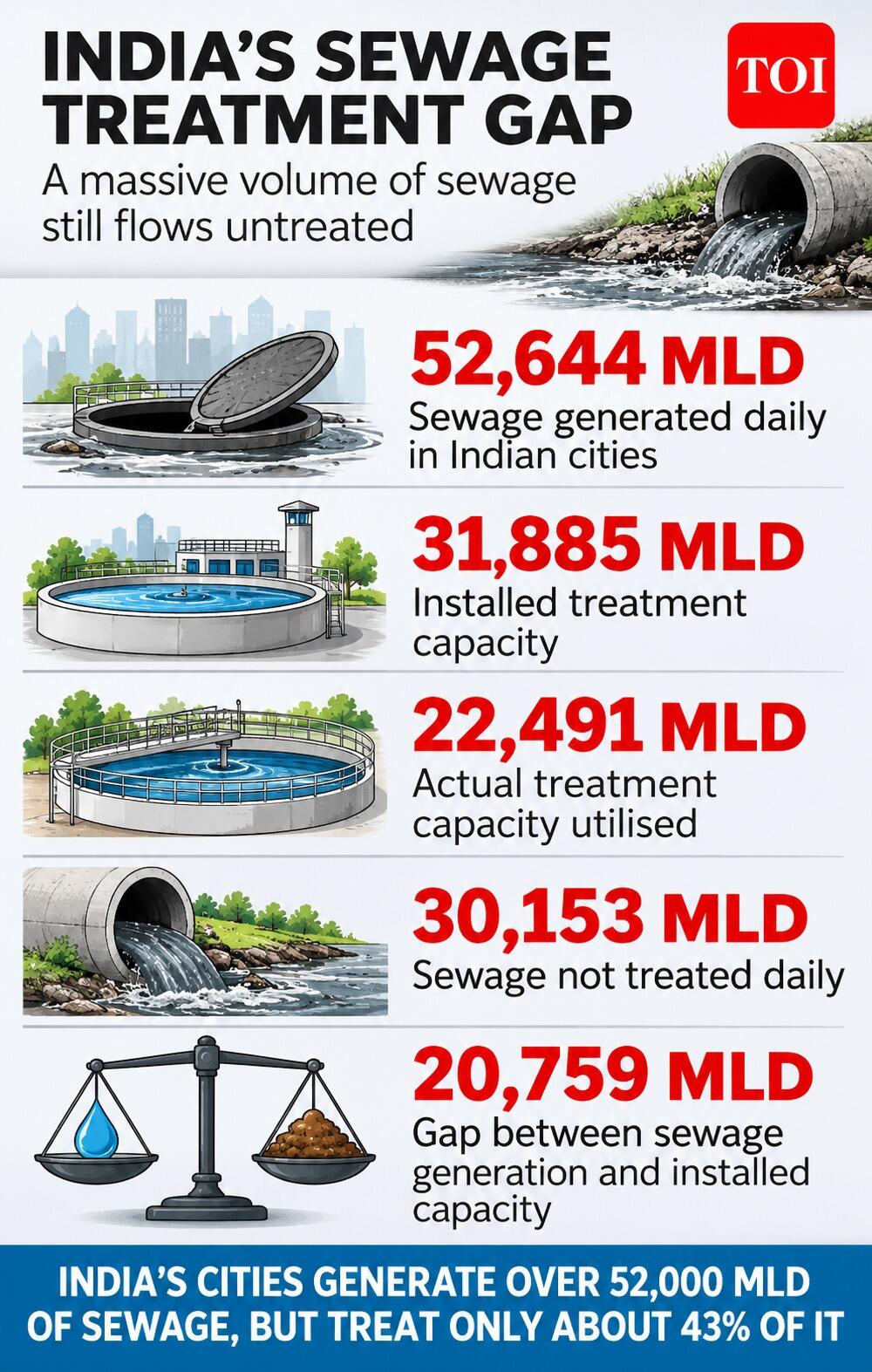
India generates 52,644 MLD of sewage daily, but treats only about 43%, leaving over 30,000 MLD of wastewater untreated
Just because you have treatment plants on paper doesn’t mean that the sewage is being treated.But due to incomplete sewer systems, poor maintenance, inadequate pumping infrastructure and unconnected households, wastewater never makes it to these facilities.
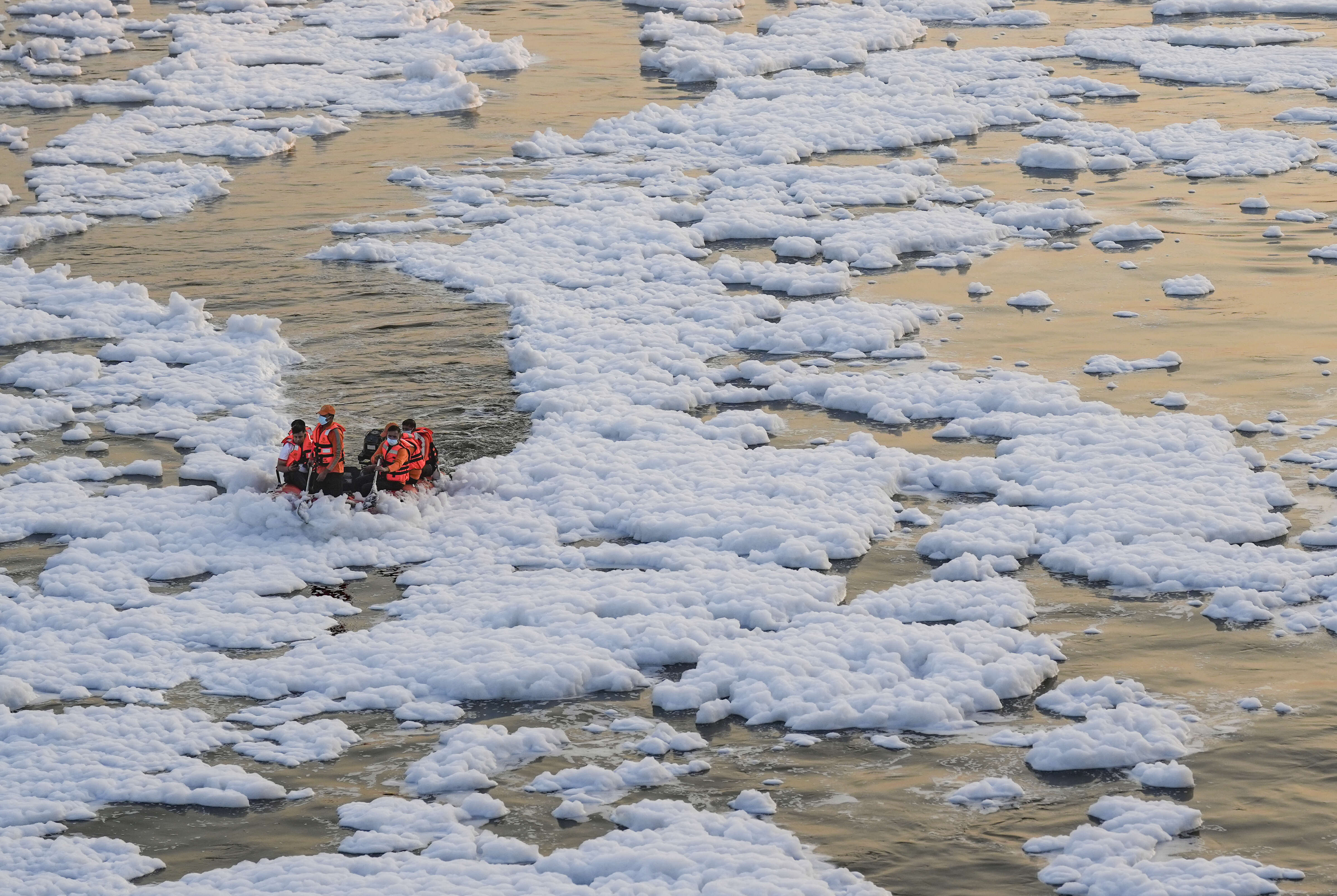
Toxic foam floating on the polluted Yamuna river (Photo credit: PTI)
Breaks for journey treatment
Often the problem starts before home. Most of metropolitan India is covered by underground sewer networks, but many neighborhoods still rely on septic tanks or informal drainage systems.The parliamentary report of August 2026 had said that of the total 11.32 crore urban households, only 3.45 crore households in AMRUT cities had sewer connections and about 2.85 crore households were using septage-based sanitation systems.It also discovered poorly-constructed septic tanks. Only 32% were correctly lined and 43% lacked access chambers for desludging and maintenance.
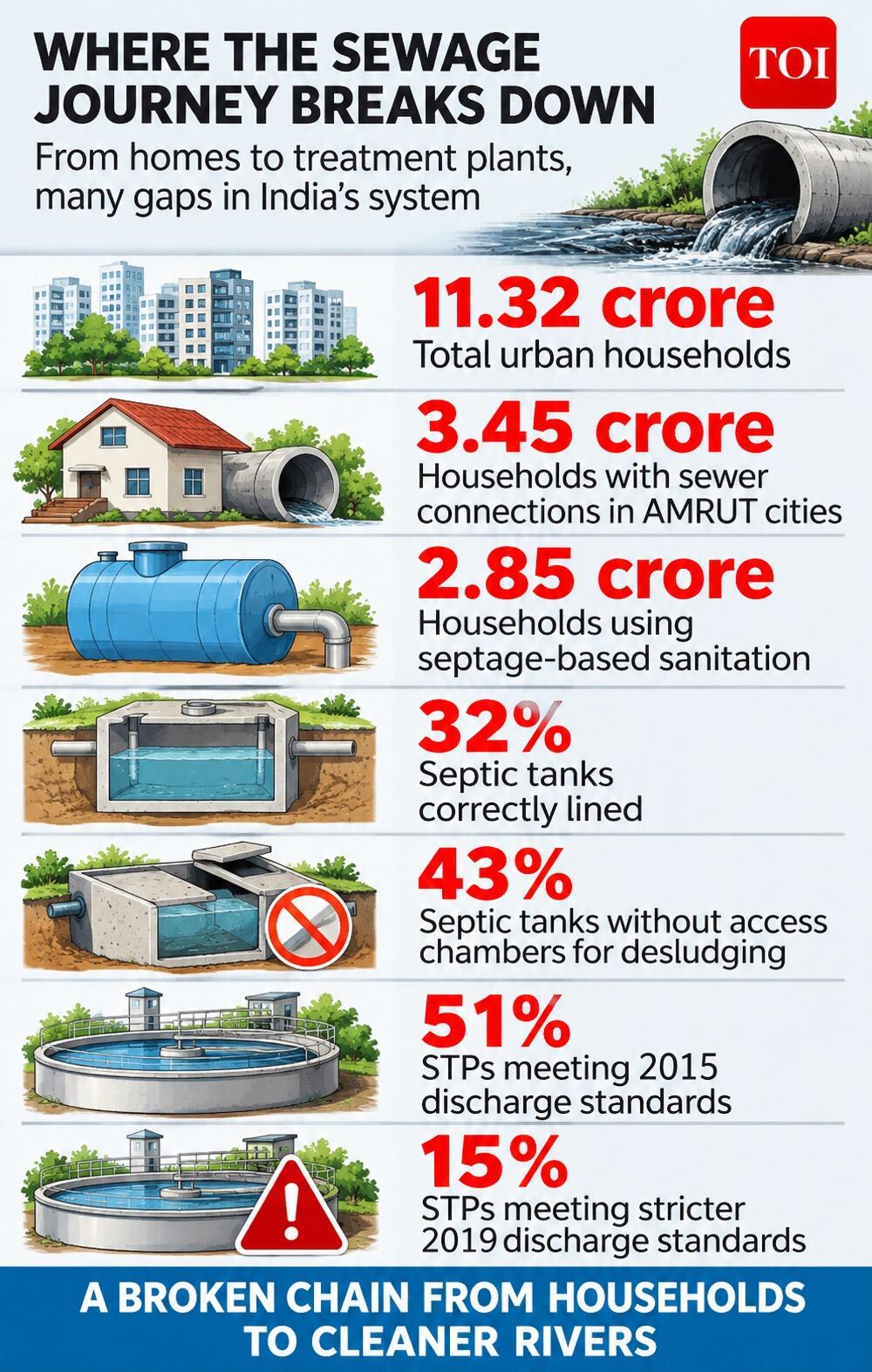
Gaps in India’s sewage system leave households poorly connected, septic tanks inadequately maintained and treatment plants struggling to meet discharge standards
Open drains can also be used to drain waste water from kitchens, bathrooms and toilets where there are no sewer connections.Many of these drains empty raw sewage into nearby lakes, streams and rivers.Even where treatment plants exist, broken pipes, blockages and incomplete household connections can lead to underutilization.
Clean water is not enough treatment
The trouble doesn’t stop once sewage reaches a STP.A survey of over 1,000 treatment plants by a third party had found that only 51% met the 2015 discharge standards and only 15% met the tighter 2019 rules, a parliamentary committee said.
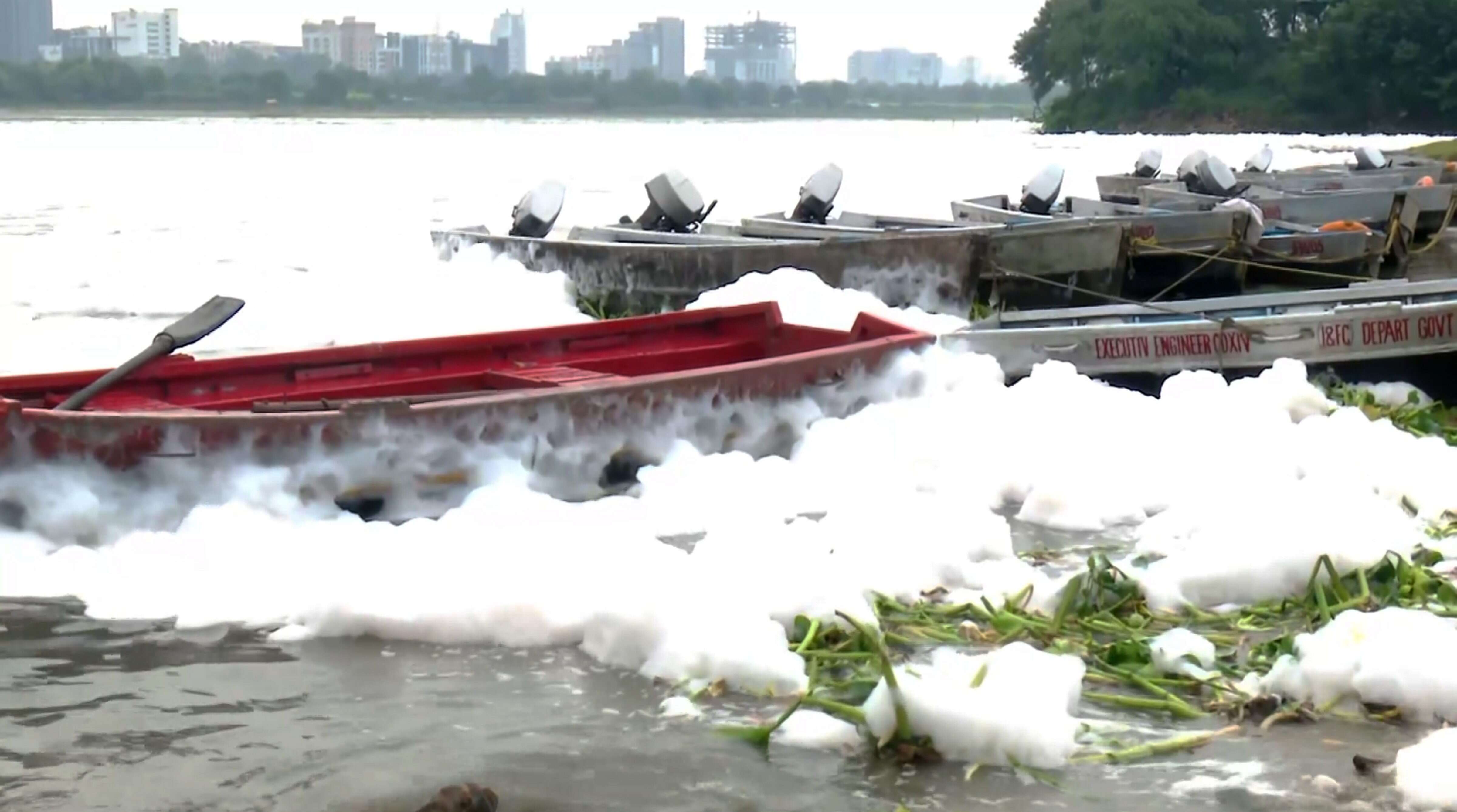
Thick layers of white foam float on the waters of the Yamuna river near Kalindi Kunj and Okhla Barrage, in New Delhi. (Photo credit: PTI)
This is another problem, as the waste water can go through the treatment plant without meeting the quality standards before release.
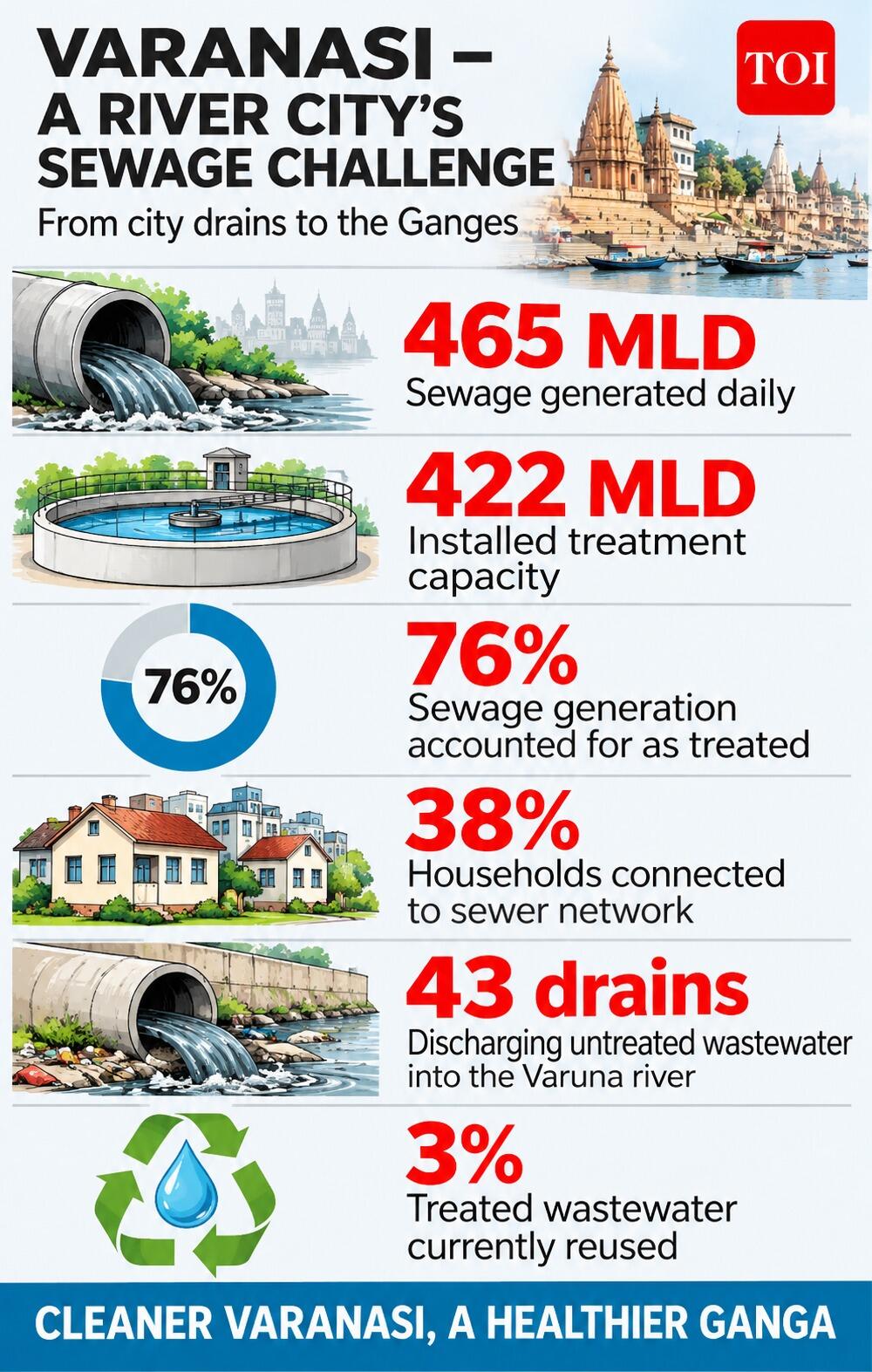
Varanasi generates 465 MLD of sewage daily, but gaps in treatment, sewer connectivity and wastewater reuse continue to pose a challenge to the Ganga’s cleanliness
Another warning comes from the monitoring of the Namami Gange program in 2025-26. Of the 156 STPs monitored in 73 towns along Ganga, 116 were found to be operating below their designed capacity during the monitoring round of December 2025-March 2026.The two plants were designed for a capacity of 2,512.75 MLD and consumed 1,494.61 MLD.
Rivers to sewers
A good example of how this breakdown plays out on the ground is Varanasi. According to an action plan drawn up by the Council on Energy, Environment and Water (CEEW) in July 2026 with the National Mission for Clean Ganga and Varanasi Nagar Nigam, the city generates about 465 MLD of sewage against a treatment capacity of 422 MLD installed.However, only 76% of the sewage generation is actually accounted as treated. Only 38% of households are connected to the sewer network.43 drains discharge untreated waste water into river Varuna. Only about 3 percent of treated wastewater is reused today.
Who’s watching the last release?
It’s not just about adding more treatment plants. Cities must ensure that all households are connected to a working collection network, that sewage is reaching treatment plants, that plants are operating at their designed capacity and that treated water meets prescribed standards.Equally important is regular monitoring of discharge quality, especially BOD and fecal coliform levels.
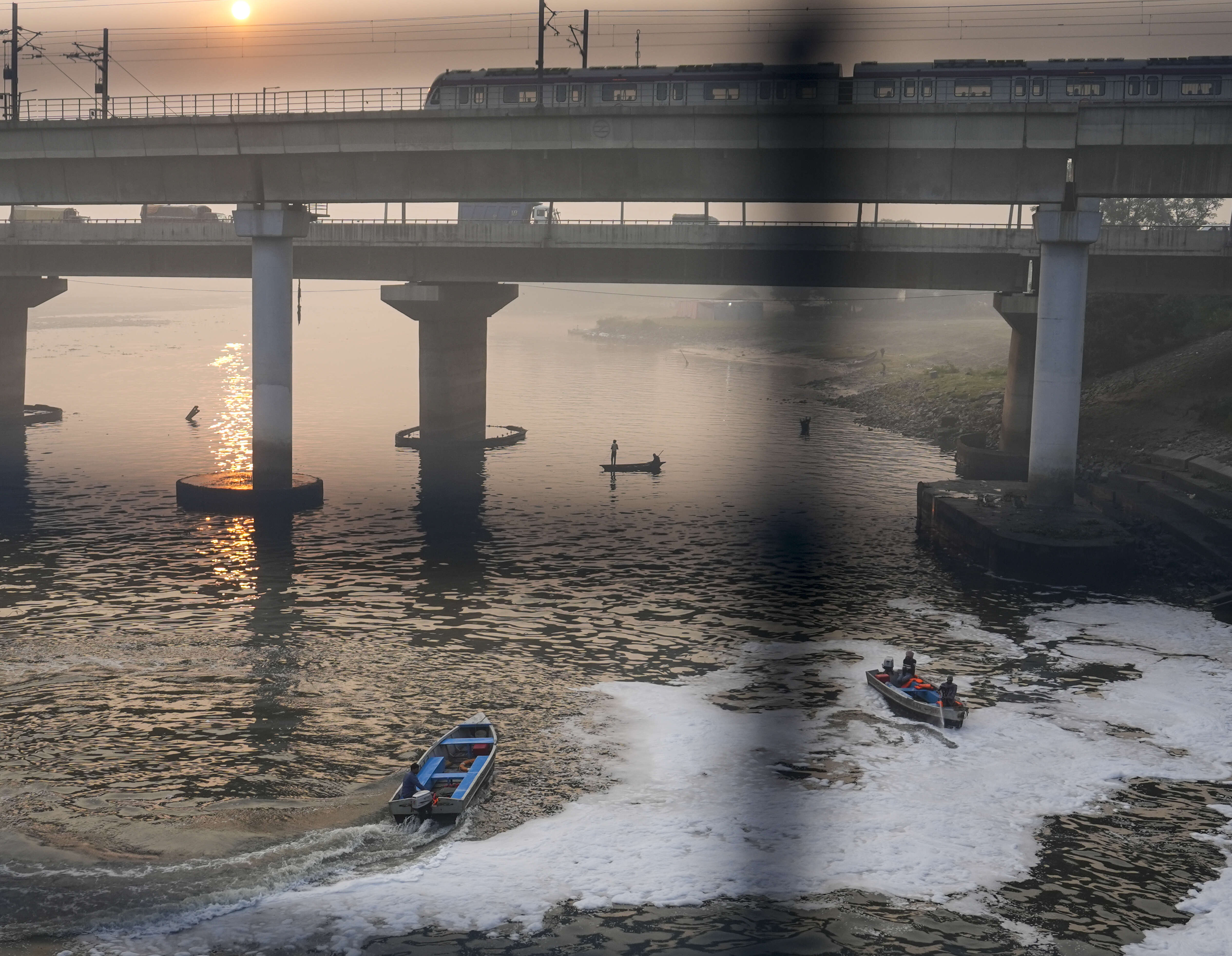
Workers spray an anti-foaming chemical solution from a boat to tackle toxic foam on the Yamuna rive (Photo credit: PTI)
The government has set a target to create 10,000 million liters a day (MLD) of treated-water reuse capacity by 2030 and meet 20% of urban water demand through recycled water.But the latest findings of parliamentary committees show that at present only 6,013 MLD of treated wastewater is being reused.Unless cities monitor the whole movement from the household drain to the final discharge point, sewage treatment will continue to be a half done job.The real test of a city’s sanitation system is not how many treatment plants it builds but how much wastewater it actually collects, treats to the required standards and keeps out of rivers untreated.