








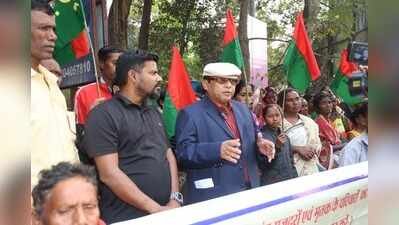
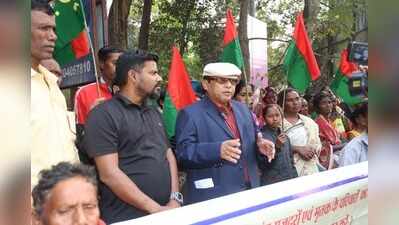
Jamshedpur: For more than two decades, Samit Kumar Carr has followed a trail of silica dust through Jharkhand’s tribal belt — from Chandil and Chaibasa to Dumaria, Gurabandha and Dhalbhumgarh — documenting workers whose lungs have been damaged by the ramming mass industry.The 71-year-old founder and general secretary of the Occupational Safety and Health Association of Jharkhand (OSHAJ) has taken their cases to the National Human Rights Commission (NHRC), seeking compensation, pensions and rehabilitation for families in East Singhbhum, West Singhbhum and Seraikela-Kharsawan districts of Kolhan and Jhargram in West Bengal.Carr said OSHAJ had identified more than 3,000 suspected patients between 2003 and 2025, and documented 2,158 suspected cases among ramming mass workers. Of these, only 86 — 52 in Jharkhand and 34 in West Bengal — have been officially recognised for compensation, he claimed.His organisation’s campaign has helped secure over Rs 13.5 crore in compensation and welfare assistance, according to Carr. OSHAJ’s website now puts the figure at more than Rs 15 crore. The figure could not be independently verified.Carr said the main obstacle was the lack of a clear, scientifically valid procedure for diagnosing and certifying silicosis. Workers exposed to silica dust are often treated for tuberculosis, he said, though the diseases are distinct and can occur together. National TB guidance recommends occupational history screening and evaluation for silicosis among exposed patients.“We need a clear definition and a standard diagnostic process so genuine victims are identified and become eligible for compensation and welfare schemes,” Carr said.The campaign is also constrained by money and manpower. OSHAJ currently has seven field volunteers and four paid staff members, Carr said. He estimates spending nearly Rs 45 lakh of his own money on documentation and legal follow-up.Carr wants the govt to screen TB patients with a history of silica exposure, register workers and link registration to factory licences. He also wants safeguards for workers in the unorganised sector, where informal employment can make responsibility difficult to establish.NHRC records show OSHAJ began pursuing silicosis-related cases before the commission in 2007.