








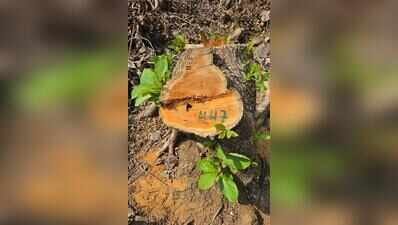
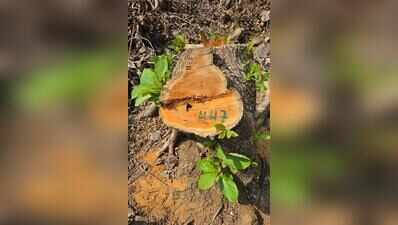
Navi Mumbai: A month after tree cutting was stopped at the pumped storage power (PSP) project site in Saidongar village, Karjat, activists found tree stumps bearing double numbers in oil paint and marker, CCTV cameras, police and forest staff deployment, and fresh shoots from the stumps. They questioned the numbering goof-ups.The tree cutting was halted on Oct 27 after massive protests. Activists claimed about 5,000 trees had been cut, while the forest department put the number at 1,102 across 30 hectares of forest land. The compensatory plantation against 34,941 trees for the two-phase project is proposed at Patan taluka in Satara district. The environmental impact assessment report and environmental management plan recorded 652 flora and fauna species at the site, about 16 km from Bhimashankar Wildlife Sanctuary’s eco-sensitive zone.A statewide protest against PSP projects is scheduled in Pune on Dec 3.Activist-advocate Kailas More alleged, “We doubt the forest department’s intention as they installed CCTV cameras after chopping around 5,000 trees. No tree numbering goof-up would have been surfaced had the CCTVs installed before tree felling. Resprouting after a month has raised tree survival hopes. The timbers have been transported out.”Karjat (E) range forest officer Sameer Shinde said: “Around 48,557 trees have been marked for felling for the project’s phase-I (lower) and phase-II (upper). However, 34,941 trees will be cut. The project proponent has offered 252 hectares of private forest land in Patan taluka for compensatory plantation against diversion of 233 hectares at the Saidongar site. CCTV cameras have been installed after violence and visits of top politicians.”On double-tree numbering, Shinde clarified, “The first group of tribal workers used markers to number stumps but left midway amid pressure and threats from locals. Another group used green oil paint, causing numbers to appear twice on the tree stumps.”The flora and fauna consist of 271 varieties of plants: orchids 13; pteridophytic plants 30; lichens 22; endemic plants 33; rare, endangered and threatened plants 25; invasive alien species 14; shrubs and climbers 22; herbs and grasses 24; mammals 21; avians 44; amphibians 14; reptiles 22; butterflies 45; fish 14; monsoon season herbs 31; and monsoon season grasses seven.