










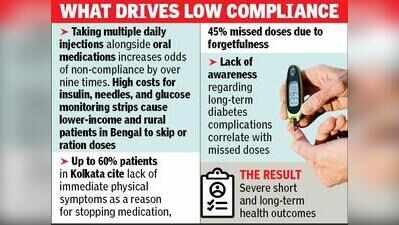
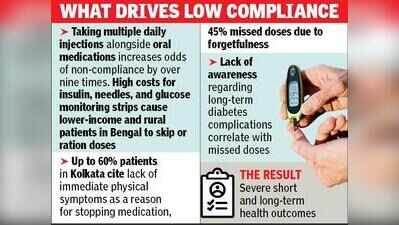
Kolkata: Less than half of 3.5-4 million diabetics in Bengal, who need insulin, don’t get the medication due to various reasons, including non-diagnosis, wrong diagnosis and misconceptions among patients, said endocrinologists on World Diabetes Day on Saturday. This poor compliance rate remains a major reason behind uncontrolled diabetes in a growing number of patients, accelerated organ damage and early death in Kolkata and Bengal, said the experts. These patients were fast moving towards irreversible organ damage and death, they pointed out.While less than half of diabetics were diagnosed in Kolkata and Bengal, less than 50% of those who require insulin were not getting it, said endocrinologist and diabetes prevention expert Debashis Basu. Around 28% of Kolkata’s population is believed to be either diabetic or has borderline diabetes. “Insulin should be prescribed much earlier than it is now done. For some reason, doctors refuse to do it till there has been significant damage to organs like the kidney, which is already too late to use insulin. We need diabetes educators to change the thought and the mode of diabetes treatment through early use of insulin,” said Basu.One of the most concerning misconceptions among patients prescribed insulin is that injections can be skipped once their blood glucose levels appear normal, said Arcojit Ghosh, consultant diabetologist, BP Poddar Hospital. “Many deliberately omit doses while attending social functions, ceremonies or travelling, primarily due to the inconvenience of administration. However, such irregularities can significantly compromise glycaemic control. In my clinical practice, I frequently encounter patients whose HbA1c levels remain persistently elevated despite being prescribed insulin. On further assessment, we often discover a pattern of intermittent dose omission, with patients assuming that occasional normal glucose readings justify skipping their prescribed injections,” added Ghosh.Early insulin can remit Type II diabetes if taken along with lifestyle modifications, said Tapobrata De, cardiology head at Charnock Hospital. “There is a misconception among patients that once taken, insulin has to be continued life-long. So, patients insist on oral medication which is harmful for organs in the long run. Early insulin use can control diabetes more effectively and also improve treatment outcome in the long run. The pancreas cells that create insulin develop a memory triggered by insulin use and respond better to drugs later. Oral medicines, on the other hand, have a harmful effect on liver, kidney and pancreas and can accelerate neurological and cardiovascular diseases,” added De.Despite its critical role in managing blood glucose levels and preventing complications, insulin is not always prescribed or taken as adequately as required, said Rachna Mazumder, director, endocrinology, Fortis Hospital, Anandapur. “Barriers such as delayed diagnosis, inadequate medical guidance, fear of injections and limited awareness can prevent patients from receiving or adhering to appropriate insulin therapy. It is important that every patient who requires insulin receives timely prescriptions in the correct dosage, continuous access to insulin, and proper education on its use. Ensuring adequate insulin treatment is not just about controlling blood sugar; it is about preventing complications and improving patients’ quality of life.”Clinical studies conducted across medical colleges and clinics in Kolkata reveal wide variations depending on the patient population and whether insulin is combined with oral drugs. A study at a Kolkata Medical College Diabetic Clinic found that compliance was lowest among patients taking both insulin and oral hypoglycaemic agents, standing at just 43.4%. Overall anti-diabetic medication compliance in that cohort was 57.7%.An earlier hospital-based study in Kolkata focusing on patients with poorly controlled blood sugar found acceptable compliance in only 10.38% of participants, while 89.62% demonstrated poor adherence.Repeated insulin omission results in episodes of hyperglycaemia and increased glycaemic variability, said Ghosh. “When sustained, this can precipitate glucotoxicity, a metabolic phenomenon in which prolonged glucose elevation impairs pancreatic beta-cell function and aggravates insulin resistance. Consequently, some patients may require higher insulin doses to regain adequate glycaemic control.”